
Italy travel guide
This Italy travel guide gives you everything you need to know before your first trip to Italia: language, currency, safety, power sockets, how to get there by train and how to get around by public transport. I have travelled to Italy multiple dozen times – around 50 trips so far – so these tips come from first-hand experience.
Below you’ll find the basics at a glance, the best time to go, the regions, how to get around, what to know about eating out – and the little things nobody tells you until you’re standing in front of a closed shop at 2 pm.
Quick facts
Italy at a glance
Rome
Capital
Italian
Language – German in South Tyrol, French in the Aosta Valley
Euro (€)
Currency – also in San Marino and Vatican City
CET
Time zone – UTC+1, summer time UTC+2
C, F, L
Plug types – 230 V, 50 Hz
112
Emergency number – works EU-wide
Optional
Tipping – a coperto (cover charge) is often already on the bill
Drinkable
Tap water – unless a sign says “acqua non potabile”
Why Italy
Why travel to Italy?
Italy is a great travel destination for many reasons: rich history that is still visible in paintings and buildings, divine cuisine and famous brands like Illy and Ferrari. Summer is ideal for beaches and for hopping by train from one city to the next, but Italy offers unique experiences all year round: in northern Italy you can go skiing in winter, hunt for truffles in autumn and discover less crowded cities from spring to early summer.
And the best part: you never really finish. After around 50 trips I still find a village, a bakery or a train route I didn’t know. Italy works for a long weekend in one city just as well as for a slow three-week road trip – and it’s a wonderful country for travelling with kids, because Italians simply love children.

When to go
Best time to visit Italy
There’s no bad time to travel to Italy – only a better time for what you want to do. Here’s a rough guide by season:
March – May
Spring
Mild temperatures, blooming gardens and the first outdoor coffees in the sun. Perfect for city trips to Rome, Florence or Naples. Easter week gets busy, so book early.
June – August
Summer
Beach time, festivals and long evenings. Cities can get very hot in July and August, and around Ferragosto (15 August) many local shops and restaurants close for holidays. The mountains of South Tyrol are a cool escape – here’s my packing list for July.
September – November
Autumn
My favourite season: warm sea in September, grape harvest, truffles and chestnuts in October, far fewer crowds. Expect more rain from November.
December – February
Winter
Skiing in the Dolomites, Christmas markets in the north, quiet museums in the cities and the odd Krampus run. The south and Sicily stay mild, but not beach-warm.
Check the dates of Italian public holidays before you book – on days like Corpus Domini or 1 May some shops and museums close or have special opening hours.
Regions
Italy by region
Italy has 20 regions, and each one feels like a small country of its own – with its own dialect, its own dishes and its own pride. A rough overview:
Lakes, Alps, fashion and great food
Northern Italy
Lake Como, Venice, the Dolomites and the food capital Bologna. Easy to reach by train from Germany, Austria and Switzerland.
Explore: Lombardy, Veneto, South Tyrol, Emilia-Romagna, Liguria, Piedmont, Friuli Venezia Giulia
Popular destinations in Italy
Want the full list? See the overview by city and region.
Getting around
How to get to and around Italy
I travel through Italy mostly without a car – the rail network is dense, affordable and often the most relaxed way to go. Coming from Germany, Austria or Switzerland, you can even arrive by direct train.
The easiest way
By train
High-speed trains (Trenitalia’s Frecce and Italo) link Milan, Bologna, Florence, Rome and Naples in a few hours; regional trains reach the smaller towns. Book high-speed tickets early for the best prices – regional fares are fixed. Paper tickets for regional trains must be validated before you board. All my train trips.
For the countryside
By car
A car makes sense for Tuscany, Apulia or Sicily. Motorways (autostrade) are tolled, and most historic centres are ZTL zones – drive in without a permit and the fine arrives by mail. Read what you need to know before driving to Italy and get inspired by my road trips.
Walk, bus, metro – or Vespa
In the cities
City centres are best explored on foot. Rome, Milan, Naples, Turin and others have metros, the rest run on buses and trams. Tickets are often sold at newsstands and tabacchi, and many cities now accept contactless cards directly at the gate. And yes: rent a Vespa at least once.
Food & etiquette
Eating out in Italy
Food is the reason half of us travel to Italy. A few rules make it even better:
Coffee at the bar
A caffè is an espresso. Drinking it standing at the counter is cheaper than sitting at a table. Cappuccino is a breakfast drink – ordering one after lunch is allowed, but you will get a look.
Meal times
Lunch is roughly 12:30–14:30, dinner rarely before 19:30 – and later the further south you go. In between, many restaurant kitchens are closed.
The bill
Coperto (cover charge, usually €1–4 per person) is normal and covers bread. Tipping isn’t expected; rounding up for good service is a kind gesture. Ask for the bill – it won’t come on its own.
Aperitivo, pizza & gelato
Early evening is aperitivo time: a spritz with snacks. Then pizza – I’m testing my way through Italy in my PizzaDellaVita series – and gelato for dessert. Here’s what makes gelato different from ice cream.
More tips: my restaurant reviews and Italian recipes to cook at home.

Practical tips
Things I wish I had known on my first trip
01
Book the big sights ahead
Places like the Last Supper in Milan, the Uffizi in Florence, the Vatican Museums or the Colosseum sell out – sometimes weeks in advance.
02
Expect a city tax
Most cities charge a tourist tax (tassa di soggiorno) per person and night. It’s usually paid at the hotel, often in cash.
03
Dress for churches
Shoulders and knees should be covered in churches and cathedrals. A light scarf in your bag solves it.
04
Mind the opening hours
Smaller shops often close for a long lunch break and on Sundays. In August, whole neighbourhoods go on holiday.
05
Know the local rules
Cities are introducing rules for visitors – Venice has charged day-trippers an access fee on peak days since 2024, and Rome has its own set of tourist rules. Check before you go.
06
Travelling with kids?
Pack a small first-aid kit – here’s what I pack for my toddler – and find more ideas under family travel in Italy.
Map
Map of Italy: places I’ve visited
The map shows every city I have already visited and written tips about. If you are missing specific information, don’t hesitate to request a blog post.
FAQ
Good to know before you go
What language is spoken in Italy?
The official language is Italian. In the regions bordering Germany and Austria, especially South Tyrol, German is widely spoken, too, and French is widely understood in the region bordering France. In touristy regions and big cities English is widely spoken, especially by younger people. In the countryside and among older people you will most probably need some Italian. I have always found a way to communicate – by pointing at things or using an online translator as a last resort.
What currency is used in Italy?
Italy uses the euro, like San Marino and Vatican City. If you travel from another euro country, you don’t need to exchange any money.
Can I pay by card in Italy?
Cashless payment by debit or credit card or contactless with Google Pay or Apple Pay is usually possible in chain supermarkets such as Coop or Lidl, in bigger stores and in some restaurants. Most restaurants in Italy, especially outside of tourist hotspots, are privately owned, so you will most probably need to pay in cash. Keep some euros with you.
Is Italy safe for tourists?
Italy is considered safe to travel to, but watch out for pickpockets, especially in touristy areas and in front of public sights such as the Pantheon in Rome. Keep an eye on your belongings and valuables, don’t be too trusting with street vendors and never pay in advance or for a service you didn’t ask for – for example for luggage help that is followed by a request for money.
Which power outlets and adapter do I need in Italy?
Italy uses 230 V and 50 Hz with plug types C, F and L. Travellers from Germany and most of continental Europe can usually use their own plugs; visitors from the UK, the US and other countries need a travel adapter.
How do I get around Italy without a car?
Italy has a dense rail network: high-speed trains connect the big cities, regional trains reach smaller towns, and buses cover places without a train station. I usually travel by public transport without a car – rental Vespas excluded, those are almost always a good idea.
Which direct trains go to Italy from other European countries?
Italy is not in the centre of Europe, but the train connections are impressive – by regional train, high-speed train or even overnight train. Popular routes are:
- Munich – Innsbruck – Merano – Verona (read my Innsbruck – Merano trip report)
- Basel/Zurich – Como – Milan (read about the Zurich – Milan train)
- Nice – Monaco – Genoa
- Munich – Milan or Rome by sleeper train
- Vienna – Venice
Routes change, so always check current timetables before you book.
Do I need to tip in Italy?
No, tipping isn’t expected. Many restaurants add a coperto (cover charge) to the bill. If you were happy with the service, rounding up or leaving a few euros is a nice gesture.
When is the best time to visit Italy?
Spring (April to June) and early autumn (September and October) are ideal: pleasant temperatures and fewer crowds than in July and August. Winter is great for skiing in the Alps and quiet city trips.
Do I need a car in Italy?
Not for cities – trains and public transport are the better choice there. A car is useful for rural areas such as Tuscany, Apulia or Sicily. Watch out for ZTL zones (limited traffic zones) in historic centres.
Latest posts
My most recent blog posts about Italy
-
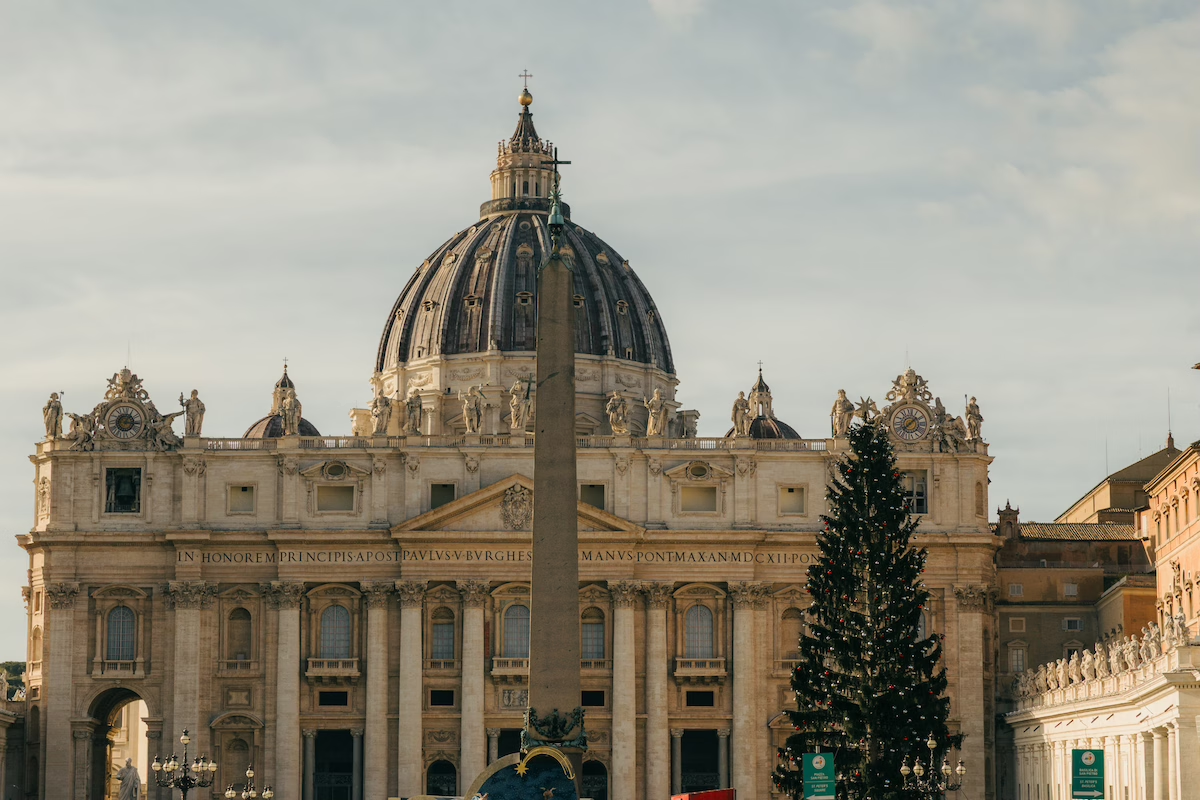
Christmas in Rome 2026: Markets, Lights, Nativity Scenes & Key Dates
Christmas in Rome 2026 runs from late November to the Befana on 6 January. Here are the markets, lights, nativity scenes and…
-

NH Bologna De La Gare Review: Right at the Station, Surprisingly Quiet
Stayed at the NH Bologna De La Gare hotel in Bologna twice in one trip – here’s my honest review. The location…
-

Pearà Recipe: Verona’s peppery Bread Sauce for Bollito Misto
A simple pearà recipe for Verona’s creamy, peppery bread sauce, plus where to eat it hot at Italian Christmas markets.
-

Florence to Arezzo Train: new 200 km/h Regional Trains are coming in 2027
The first of six new 200 km/h regional trains has made its debut run from Arezzo to Florence. Here’s what is confirmed,…
-

Gluten Free Liguria: A new Logo will mark Restaurants with trained Staff
Gluten free Liguria: the region plans a list of restaurants with trained staff and a new logo. What we know so far…
-

Riccione Christmas 2026: Ice Skating, Giant Wheel and Food Village
Riccione Christmas 2026 brings an ice rink by the sea, a 55-metre Ferris wheel and a Christmas Food Village. Here are the…
Ready to plan your trip?
Browse all articles in the category Italy, or let me plan your trip: custom Italy itinerary.