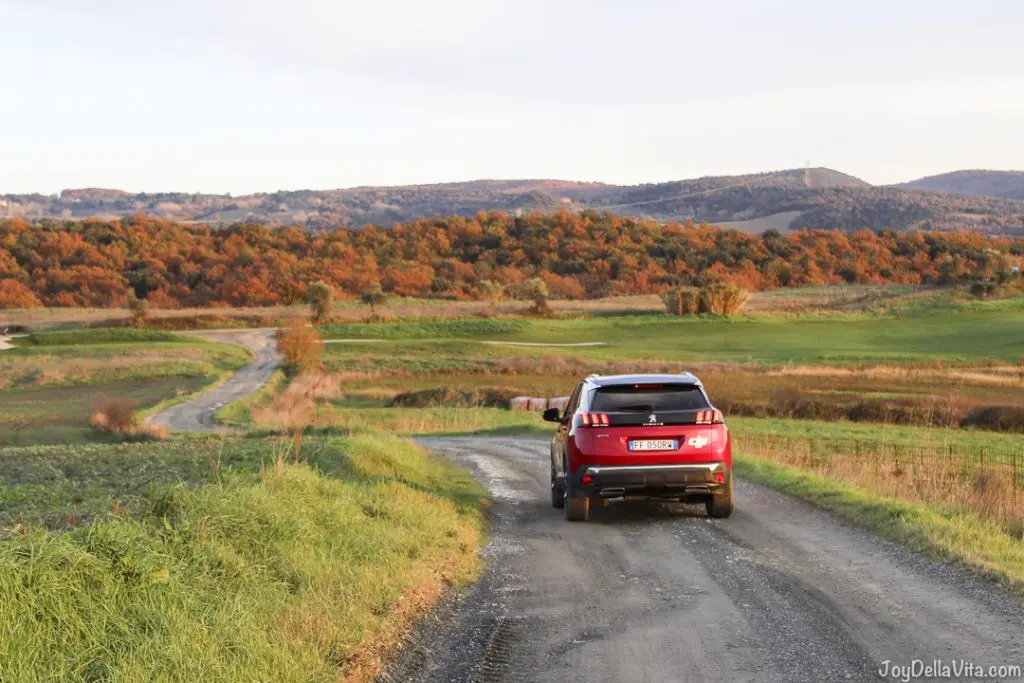
Italy is one of those destinations where getting there by car just makes sense. You load up the boot, point south, and somewhere after the Alps, life gets a little warmer and the food gets a lot better. But before you cruise past that border sign and immediately forget everything you know about traffic rules, because Italians tend to drive more… energetic, there are a few things worth sorting out in advance. Your only preparation is reading this article carefully, and off you can go on your Italian Roadtrip.
Everything You Need to Know Before Driving to Italy (Most Tourists Get This Wrong)
Crossing the Border — Is There Anything to Actually Do?
For most travellers coming from within the EU — through France, Switzerland, or Austria — there are no formal border controls these days, though random checks do happen. That said, Switzerland is not part of the EU, and if you’re routing through there, you’ll need a Vignette (a motorway sticker, currently around CHF 40) before you even touch a Swiss motorway. It’s not optional, and the fines aren’t friendly.
Once you’re into Italy itself, the driving experience changes pretty quickly. The roads are, shall we say, spirited.
The Autostrada: Italy’s Toll Motorway System
Italy’s motorway network — the Autostrada — is extensive and largely excellent. It’s also almost entirely tolled. You’ll pay per stretch driven, and costs add up faster than expected on longer journeys. A trip from the French border down to Florence, for example, can easily run €30–40 in tolls one way.
Payment options at toll booths include cash, card, or the Telepass transponder system (the Italian equivalent of a tag). Most booths take contactless now, but it’s still wise to have some cash as backup — not every lane works perfectly, and queues at manned booths can be long in summer.
Planning a route through Piedmont specifically? The roads around Turin and the northwestern corner of Italy are genuinely lovely to drive, especially once you get off the autostrada and into the hills.
Speed Limits — and Yes, They’re Enforced
Italy uses speed cameras extensively, and they’re not always obvious.
- Motorways (Autostrada): 130 km/h standard, reduced to 110 km/h in rain
- Dual carriageways: 110 km/h
- Outside built-up areas: 90 km/h
- In towns and cities: 50 km/h, sometimes 30 km/h
The rain rule catches people out regularly. When conditions are wet, the motorway limit drops automatically — it’s not just a suggestion.
ZTL Zones: Italy’s Version of Emission Restrictions
Unlike France’s Crit’Air system or Germany’s Umweltzonen, Italy doesn’t operate a single national low-emission zone framework. Instead, it has something arguably more confusing: ZTL zones (Zone a Traffico Limitato), which are restricted traffic areas found in the historic centres of most Italian cities.
These zones are monitored by cameras, and entry without a permit — which tourists generally cannot obtain — results in fines that typically arrive by post weeks later. Sometimes months later. It’s a deeply unpleasant surprise.
If you’re heading into Rome or planning any city driving in Italy, research the ZTL boundaries beforehand and park outside the zone. It genuinely isn’t worth the risk.
Some larger cities also have broader Area C or pollution-based restrictions during high-smog periods in winter, particularly in the Po Valley — which covers Milan, Turin, and a good chunk of northern Italy. Older diesel vehicles especially should check local regulations before entering.
A Few Other Things Worth Knowing
You’re legally required to carry a reflective jacket and a warning triangle in the car at all times. Headlights must be on outside built-up areas even during the day. And using a phone while driving — even briefly — carries heavy fines and potential licence points.
Italy is brilliant for a road trip. Just go in with your eyes open.
Driving to Italy by Car: Your Questions Answered
Do I need a vignette to drive to Italy through Switzerland?
Yes, if your route passes through Switzerland, you need a Swiss motorway vignette (currently CHF 40). It’s valid for a calendar year and must be displayed on the windscreen. Driving on Swiss motorways without one results in an on-the-spot fine, often significantly higher than the sticker itself.
How does the Italian motorway toll system work?
Italy’s autostrada is a pay-per-use toll network. You collect a ticket when you join the motorway and pay based on distance when you exit. Payment is accepted by cash, credit/debit card, or Telepass. Not all lanes accept all payment types, so reading the signs above each booth before you commit to a lane is genuinely important.
What are the speed limits on Italian motorways, and do they change in the rain?
The standard motorway limit is 130 km/h, but this drops to 110 km/h when it’s raining. Speed cameras are common and enforce both limits. Urban speed limits are typically 50 km/h, though some cities are introducing 30 km/h zones in residential areas.
What is a ZTL zone and how do I avoid getting fined?
A ZTL (Zona a Traffico Limitato) is a restricted traffic zone in the centre of most Italian cities and towns. Entry is monitored by cameras and restricted to permitted vehicles. Tourists caught entering receive fines by post — sometimes weeks or months after the trip. Always check the ZTL boundaries before driving into any Italian city centre and park outside the zone.
What documents and equipment do I legally need to carry when driving in Italy?
You’ll need your driving licence, vehicle registration document, proof of insurance, and a valid passport or ID. In terms of equipment: a reflective high-visibility jacket and a warning triangle are legally required. Headlights must also be switched on when driving outside built-up areas, regardless of daylight conditions.




Leave a Reply