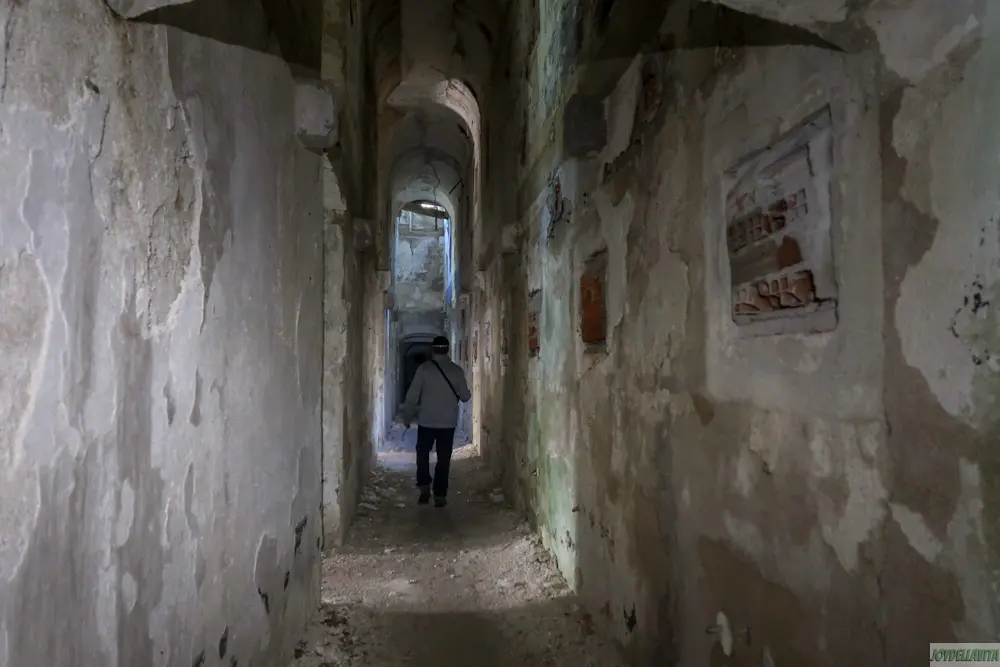
Did you ever wonder if its worhtwhile to go urban exploring in Italy? There’s something undeniably magnetic about a place that time has simply… left behind. Maybe you’ve stumbled across a video on YouTube, or seen an eerily beautiful photo on Instagram – a crumbling villa somewhere in the Italian countryside, nature quietly reclaiming what was once someone’s home. That’s the world of lost places, and if you’ve ever felt that pull of curiosity, you’re definitely not alone. Read on for everything you need to know about lost places in Italy.
Italy, with its layered history and dramatic landscapes, is actually one of the most fascinating countries in Europe for urban exploring. Maybe an abandoned farmhouses in Tuscany, decaying Art Nouveau villas in central Italy, forgotten military fortifications in the Dolomites – the variety is genuinely staggering. And no, visiting a lost place doesn’t automatically make you a dark tourist. Dark tourism is really about visiting sites specifically because of tragedy or death – a lost place is more about curiosity, history, and that particular atmosphere you simply can’t find anywhere else.
What Exactly Is a Lost Place – and Why Do People Go?
A lost place (or “abandoned place”, as urban explorers tend to call them) is any structure that has been left behind, whether that happened ten years ago or half a century ago. Some look almost lived-in – a calendar still on the wall, dishes left on a table. Others have been swallowed entirely by ivy and damp. Urban exploring, or urbex, is the practice of visiting and documenting these places, and it’s been growing steadily in popularity for years.
Why? Partly it’s the history. Partly it’s the photography. And partly it’s just that slightly surreal feeling of walking through somewhere completely frozen in time, while the rest of the world just carries on outside. There’s a whole community of explorers documenting these sites across Italy and beyond, and the content speaks for itself.
The Rules of Urban Exploring – What You Need to Know Before You Go
Before anyone rushes off to find the nearest abandoned building, there are a few non-negotiable rules. The urbex community takes these seriously, and for good reason.
Safety first, always. Wear long trousers – not optional. If you catch yourself on a jagged piece of metal or broken glass, bare skin means a much higher risk of infection, potentially serious. Same logic applies to footwear: sturdy boots or trainers with proper soles, not sandals. Floors in abandoned buildings can be rotten, unstable, or littered with debris.
If there’s any sign of standing water inside a building, do not touch it. Stagnant water in enclosed spaces can harbour genuinely nasty bacteria. And if the place looks damp or shows visible mould – which plenty of older Italian buildings will – bring an FFP2 or FFP3 mask. Inhaling mould spores in a confined space is not something you want to find out about the hard way.
Then there’s the etiquette side of things, which is just as important. The golden rule of urbex is simple: take nothing, leave nothing, break nothing. Don’t take souvenirs. Don’t leave graffiti. Don’t damage anything. The whole point is that the place stays as it is, for the next person who comes along. These spaces have survived this long – they deserve a bit of respect.
Finding Lost Places in Italy: The LostPlace App
So, where do you actually find these places? This is where the LostPlace App comes in, and honestly it’s a proper game changer for anyone planning urban exploring in Italy.
The app (also fully accessible via browser, which is handy) shows lost places on an interactive map, with user comments and updates – so you can check whether a site is still worth visiting, or whether it’s been demolished in the meantime. It’s available in multiple languages including English and Italian, and you can access the map directly here.
It’s probably no coincidence that northern Italy and the Dolomites have a particularly high concentration of lost places – much of it comes down to the region’s military history, and the scars left by two world wars. Near the Tre Cime di Lavaredo, for instance, she visited the Sperrfort Lando herself – a disused military fortification tucked into the mountain landscape that feels almost unreal to walk through. A dedicated piece on this particular lost place in the Dolomites, along with everything you need to know about visiting the Tre Cime, is coming soon.
In the meantime, the LostPlace App is genuinely the best starting point for planning a visit. Download it, pull up the map for Italy, and start exploring.

FAQ: Urban Exploring in Italy – Everything You Need to Know About Lost Places
Is urban exploring in Italy legal?
This varies by location and ownership. Entering private property without permission is technically trespassing under Italian law, even if a building appears completely abandoned. Many explorers visit sites that are accessible via public land or with prior permission. Always research a specific location before visiting, and when in doubt, don’t enter.
What should I wear and bring to a lost place?
Long trousers and sturdy closed shoes are essential – both protect against cuts from debris, which carry a real infection risk. Bring an FFP2 or FFP3 mask if there’s any possibility of mould or damp inside the building. A torch or headlamp is useful, as many abandoned structures have no working electricity and some areas can be very dark. A basic first aid kit isn’t a bad idea either.
What is the LostPlace App and how does it work?
The LostPlace App is a community-driven platform that maps abandoned and forgotten places across Europe, including a large number of lost places in Italy. Users can add new locations, leave comments, and update listings when a site has been demolished or has changed significantly. It’s accessible both as a mobile app and via browser, and is available in English and Italian among other languages.
Are lost places in Italy dangerous?
Some can be, yes. Structural instability, broken glass, exposed metal, mould, and standing water are all genuine hazards in older abandoned buildings. The key is to move carefully, never touch stagnant water, wear appropriate clothing, and trust your instincts – if something feels unsafe, it probably is.
What’s the difference between urban exploring and dark tourism?
Dark tourism specifically refers to visiting places connected to death, disaster, or tragedy – think Pompeii, Chernobyl, or war cemeteries. Urban exploring is broader and more about abandoned spaces in general, whether that’s a disused factory, a forgotten villa, or a decommissioned military fort. There can be overlap, but they’re not the same thing, and most lost places don’t fall under the dark tourism label.
Where are the best lost places in Italy?
Northern Italy and the Dolomites have a particularly high density of abandoned sites, largely due to the region’s military history. The area around the Tre Cime di Lavaredo is worth exploring, including the Sperrfort Lando. Tuscany and Sicily also have no shortage of abandoned farmhouses and estates. The LostPlace App map is the most practical way to find specific sites near wherever you’re travelling.





Leave a Reply