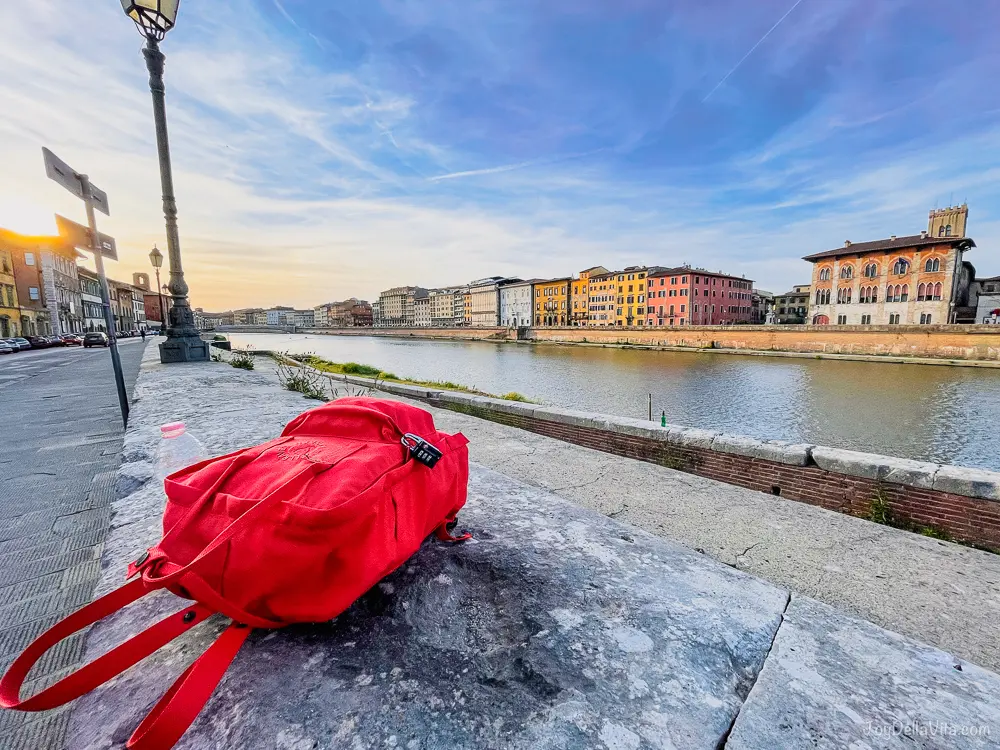
Anyone who’s done the whole family travel in Italy thing knows the sinking feeling of standing in a farmacia somewhere in Tuscany at 8 pm, pointing at a child with a 39-degree fever, and hoping the pharmacist speaks enough English to help. It’s stressful. It’s avoidable. And it starts with getting the travel pharmacy right before you leave home.
The basics for your Family Travel First Aid Kit for Italy
The non-negotiables that should be part of any travel pharmacy kit for families are actually pretty simple. But usually you only remember to bring things once you needed them the last time… Saline solution (NaCl 0.9%) is the kind of thing that sounds boring until your baby can’t breathe through their nose at 2 am in an Airbnb with no air conditioning. Get the nasal drops, not just the rinse. For infants especially, something specifically for blocked noses is essential — and yes, there are infant-specific options, so check the age guidance before you pack.
Wound care goes without saying — antiseptic wipes or spray, maybe a simple cream. Same for something for irritated or gritty eyes, which kids seem to collect on holidays, the same way they collect sand in shoes.
And then the one everyone sort of half-thinks about: fever and pain relief. Paracetamol or ibuprofen in child-appropriate doses, ideally in both suppository and syrup form if your child is small. Here’s the bit parents often miss, though — suppositories need to go in the fridge if temperatures go above around 25°C. Italy in summer is… hot. The syrup, once opened, also needs to be kept below 25°C. So if your holiday accommodation is warm (and it most probably will be), you need a small cool bag or fridge space sorted from day one. This is not optional.
Don’t forget any regular medications your child takes day-to-day, and bring more than you think you’ll need. Just in case.
Additionally: the “Day Bag”-First Aid Kit
Beyond the pharmacy basics, a small portable first aid kit is worth keeping in the day bag on excursions. Plasters in various sizes, a pair of tweezers, a tick card or tick remover (tick season is real in rural Italy), an antiseptic that doesn’t sting, and a disinfectant spray. Tissues and wet wipes are also necessities.
One genuinely underrated thing: a written note with the address of the nearest children’s clinic or paediatric emergency unit close to where you’re staying. Look this up before you travel, not when you need it. Panic and a language barrier, and probably no phone reception either, do not make for efficient panic-control.
And regardless of the pharmacy, travel cancellation and interruption insurance is a must when travelling with children.
Flying With A Baby for the first time? Read this carefully
There’s one piece of advice that comes up again and again for Italy travel with little ones — and it’s about the flight itself. To help with ear pressure equalisation on take-off and landing, breastfeeding or giving a bottle is commonly recommended. But here’s the thing people get wrong: don’t start as soon as the plane starts moving. Wait until the aircraft has actually left the runway and the cars below have disappeared from view. That’s when the cabin pressure starts to change. Start too early, and the baby will have finished feeding long before it matters — and then you’re stuck. Timing is everything.
Italian Pharmacy Vocabulary — Just In Case
If you do end up in a farmacia (easily spotted by the green cross), a few words go a long way:
| English | Italian |
|---|---|
| Paracetamol / fever | Paracetamolo / febbre |
| Ibuprofen | Ibuprofene |
| Antihistamine | Antistaminico |
| Nasal drops | Gocce nasali |
| Eye drops | Collirio |
| Antiseptic | Antisettico |
| Suppository | Supposta |
| Plaster / bandage | Cerotto / benda |
| Prescription | Ricetta |
| Pharmacist | Farmacista |
| Children’s doctor | Pediatra |
| Emergency | Pronto soccorso |
FAQ Italy with Kids: your Travel Pharmacy questions answered
Do I need to bring all medicines from home, or can I buy them in Italy?
Italy has well-stocked farmacias, and pharmacists are generally helpful and knowledgeable. However, brand names differ, packaging is different, and dosage instructions will be in Italian. If your child takes something specific — or if you’re travelling with an infant — it’s far safer and far less stressful to bring what you know from home. For anything unusual or prescription, definitely don’t rely on finding it there.
How do I store fever medicine in Italy when it’s so hot?
This is genuinely important. Opened fever syrup (paracetamol or ibuprofen) needs to be stored below 25°C once opened, which in a warm Italian summer apartment is not guaranteed at room temperature. Suppositories melt above around 25°C too. A small travel cool bag or a space in the fridge at your accommodation solves this. Check this on arrival, not when you need the medicine at midnight.
What should I look up before travelling to Italy with a sick child?
Before you travel, research the nearest ospedale pediatrico (children’s hospital) or pronto soccorso (A&E / emergency department) to your holiday base. Write the address down physically, not just saved to your phone. Also, locate the nearest farmacia with late opening hours. Doing this from home with time to spare is infinitely easier than trying to find it when a child is unwell, and you’re panicking.
Is travel insurance really necessary with children?
Yes — especially travel cancellation and interruption cover. Children get ill. Trips get cut short. Flights get missed. The financial exposure without insurance when travelling with a child is genuinely significant, and the peace of mind when you have it is worth every penny.
What’s the correct technique for easing ear pain during a flight with a baby?
The recommendation is to feed (breastfeed or bottle) during descent and ascent to encourage swallowing and equalise ear pressure. The timing matters, though: don’t start at the very beginning of the take-off roll. Wait until the plane has left the runway and you can no longer make out individual cars or buildings below — that’s when altitude and pressure changes become relevant. Starting too early means the feeding is finished before the pressure shift even begins.
Are tick removers really necessary in Italy?
More necessary than most people assume, yes. Rural and forested areas of Italy — including parts of Tuscany, Umbria, and northern regions like the Dolomites — have tick populations. Tick-borne encephalitis and Lyme disease are present in parts of Italy. A tick card or fine-tipped tweezers for safe removal, plus knowing not to twist or squeeze the tick, is basic precautionary sense for anyone spending time outdoors with children.




Leave a Reply