
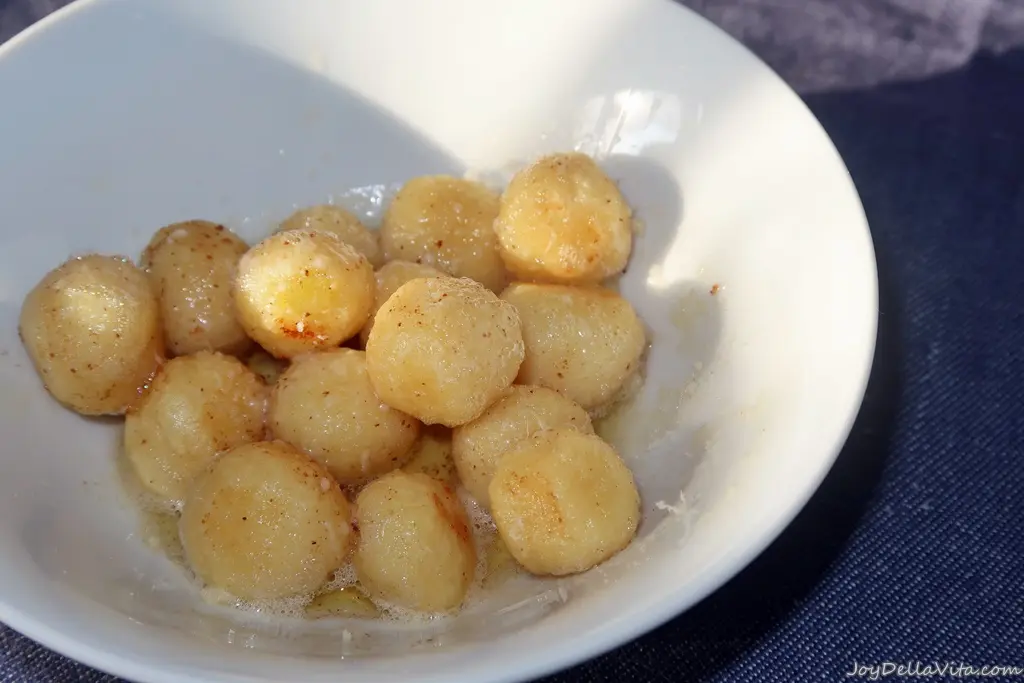
Every trattoria in Verona seems to have gnocchi di Verona on the menu, so after my last visit I wanted to find out whether this classic recipe is really as easy as it looks. Short answer: yes, as long as you don’t treat the dough like pizza dough.
Gnocchi (pronounced more or less like njoki, [ˈɲɔkːi]) are small potato dumplings and one of the most typical dishes of Veronese cuisine. Honestly, you can hardly visit Verona without eating at least one portion. Until recently I only ever bought the ready-to-boil kind at the supermarket, but after that trip I had to try making them myself. There are plenty of variations of gnocchi, for example gnocchi di semolino made with semolina, but I went with the authentic recipe that needs only potato, egg and flour, finished with brown butter and parmesan.
Quick facts: serves 2 · difficulty: easy · cooking time: just a few minutes once the gnocchi are shaped.
Gnocchi di Verona recipe: ingredients (2 portions)
- 300 g potatoes (particularly floury ones)
- 1 large egg
- 100 g all-purpose flour
- a pinch of salt
- 2 tablespoons unsalted butter
- parmesan cheese, to serve
- a few sage leaves, if you like
Floury (starchy) potatoes matter more than you’d think. They hold less water, so you need less flour, and less flour means lighter gnocchi.

How to make gnocchi di Verona step by step
As a rule of thumb, you need 1 medium to large egg per 330 g of potatoes, or 3 eggs per kilo. For two portions I used 300 g potatoes, one large egg and, as measured, a total of 90 g all-purpose flour.
Step 1: Boil and mash the potatoes
Cut the potatoes into equally sized small pieces, because small pieces cook faster than whole potatoes. Put them in a pot of cold salted water, bring it to a boil and simmer until they are very well cooked. Drain, let the potatoes cool down to room temperature and mash them. A potato masher or a potato press works, so does a fork. I didn’t own a masher at the time and used a spaghetti server (the IKEA HJÄLTE), which worked perfectly. You want fluffy, not creamy.

Step 2: Add egg and flour
Put the mashed potatoes in a bowl with a pinch of salt, the egg and some flour. Start with only about 40 g of flour and add more as you go. The ideal gnocchi dough is compact, soft and no longer sticky, and the exact amount of flour depends on how moist your potatoes are and how big the egg is. So expect to need a bit more flour than you first thought.


Handle it gently. This is not pasta or pizza dough that wants heavy kneading (unlike my fail-proof pizza dough recipe), and the less you work it, the fluffier your gnocchi di Verona will be after cooking. Rather too little pressure than too much.
Step 3: Roll and shape the gnocchi
On a lightly floured surface, roll the dough into several long ropes with a diameter of no more than 1.5 cm. Cut them into pieces of about 2.5 cm with a knife and your gnocchi are technically ready to cook. For the typical grooves, press each piece over a wooden gnocchi board or the back of a fork. The grooves hold the butter, which is the whole point. For something different I gently rolled the dough into small balls with an ice cream portioner.


Step 4: Cook the gnocchi
Bring salted water to a simmer and cook the gnocchi until they float to the surface. You can add them one by one or all at once. My tip: drop in a single test gnocco first. If it falls apart, work in a little more flour before cooking the rest.

Step 5: Brown the butter and serve
Brown some unsalted butter in a pan, add a few sage leaves if you like them, then toss in the cooked gnocchi. I like to fry them for a minute until they turn slightly crispy. Serve immediately and sprinkle with freshly grated parmesan right before eating.


What to serve with gnocchi di Verona
Brown butter and parmesan is my favourite, but in Verona and the wider Veneto you will also find gnocchi with tomatoes and parmesan, melted gorgonzola, sugar and cinnamon, or the famous Pastisada de Caval, a horsemeat sauce. Verona even celebrates the dish during carnival with the Venerdì Gnocolar. Want more dishes to try at home? Enjoy my other recipes from around the world.

Eat and learn in Verona: gnocchi, cooking classes & more
If you would rather learn from a local than from a blog, book a cooking class in Verona. It takes place in the historic centre near the Arena, and you make fresh pasta by hand, finish with a homemade tiramisù and then eat everything you cooked. Not gnocchi, but a pretty good reason to be hungry.
Planning the rest of your trip? Sort out your Arena di Verona priority tickets early, check out the restaurant with the best view in Verona for dinner, and scroll through these Verona Instagram accounts for inspiration. If you cook along at home, my list of Italian cooking YouTube channels has plenty more ideas.
Gnocchi di Verona recipe: your questions answered
What is gnocchi di Verona?
Gnocchi di Verona are small potato dumplings made with potato, egg and flour. They are traditionally served with melted butter and parmesan, with tomato sauce, or with Pastisada de Caval, a slow-cooked horsemeat sauce typical of Verona.
Which potatoes are best for this gnocchi recipe?
Floury, starchy potatoes are best. They contain less water, so the dough needs less flour and the gnocchi stay light and fluffy.
Why are my gnocchi hard or gluey?
Usually the dough was overworked or too much flour was added. Handle it gently, add flour bit by bit and cook one test gnocco first.
How do I know when gnocchi are cooked?
Gnocchi are done as soon as they float to the surface of the simmering salted water. That takes only a few minutes.
Can I freeze homemade gnocchi?
Yes. Freeze the shaped gnocchi in a single layer on a floured tray, then move them into a bag and cook them straight from frozen.
Do I need a gnocchi board?
No. A fork gives you the same grooves, and plain pieces or little balls taste exactly the same.





Leave a Reply